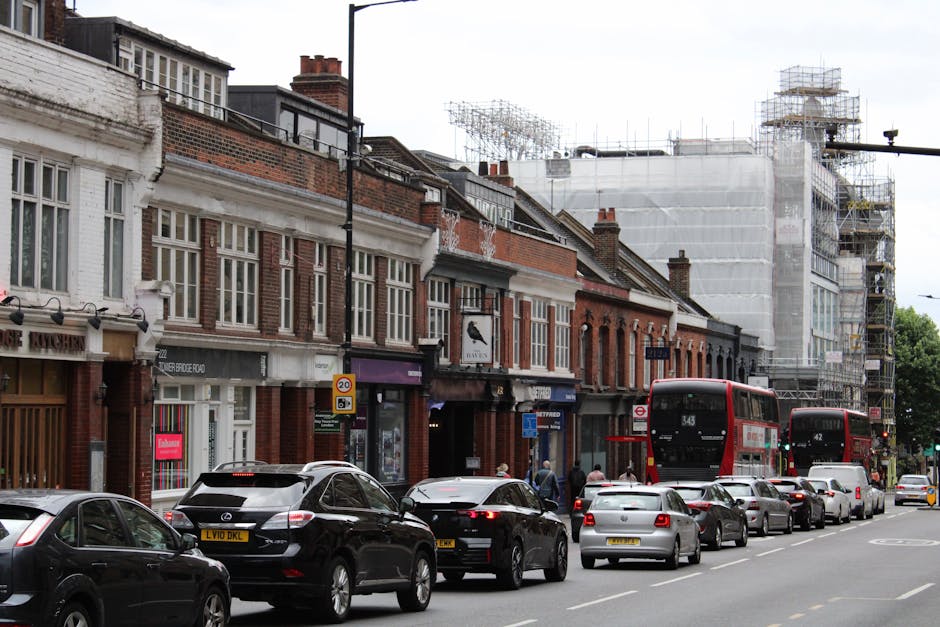
Alton Estate removals Roehampton expert street access tips
Moving in or out of Alton Estate can look simple on a map, and then the van turns up and reality kicks in. Tight bends, shared access roads, parked cars, awkward stairwells, a sudden delivery truck, and that one neighbour who has just decided to reverse out right when you need space. If you are planning Alton Estate removals Roehampton expert street access tips, the real win is not just lifting boxes well - it is planning the access so the move feels calm, not chaotic.
This guide breaks down how to handle street access around Alton Estate in a practical, local way. You will find the best way to brief your movers, what to check before move day, how to reduce delays, and where small decisions make a surprisingly big difference. Truth be told, most stressful moves are not caused by the packing. They are caused by access problems that nobody mapped out properly.
For a broader look at moving support in the area, you may also want to explore our removal services, home moves, and man and van options.
Table of Contents
- Why Alton Estate removals Roehampton expert street access tips Matters
- How Alton Estate removals Roehampton expert street access tips Works
- Key Benefits and Practical Advantages
- Who This Is For and When It Makes Sense
- Step-by-Step Guidance
- Expert Tips for Better Results
- Common Mistakes to Avoid
- Tools, Resources and Recommendations
- Law, Compliance, Standards, or Best Practice
- Options, Methods, or Comparison Table
- Case Study or Real-World Example
- Practical Checklist
- Conclusion
- Frequently Asked Questions
Why Alton Estate removals Roehampton expert street access tips Matters
Street access is the part of a move that people underestimate most. On Alton Estate, the layout, parking situation, and pedestrian flow can all influence how quickly furniture comes out, how safely boxes are carried, and whether the van can sit close enough to make the job efficient. Even a small access issue can add time and friction - and moving day already has enough of that.
Good access planning matters because it protects three things: your belongings, your time, and your nerves. If movers have to carry a sofa twice as far as planned, or if they need to pause because a vehicle blocks the route, the day becomes slower and riskier. Nobody wants a scratched wardrobe door or a last-minute scramble when the lift is already full of boxes.
There is also the neighbour factor. Shared estate roads often mean other residents need to get in and out too. A thoughtful plan makes the move feel respectful, not disruptive. And let's face it, good manners on moving day are not just nice - they help everything run more smoothly.
Expert takeaway: the best move on Alton Estate is rarely the one with the biggest van. It is the one with the cleanest access plan.
How Alton Estate removals Roehampton expert street access tips Works
The process starts before anyone touches a box. A good removal plan looks at where the van can stop, how long it can reasonably stay, what route the team will use from property to vehicle, and whether there are any awkward turns, steps, gates, bollards, or tight corners. In practical terms, it is a mini logistics exercise.
For a typical Alton Estate move, the sequence is usually:
- Pre-move access check - assess road width, parking availability, loading distance, and any obstructions.
- Vehicle choice - match the van or truck size to the route and property type, not just the volume of items.
- Carry route planning - choose the safest path from front door to vehicle, especially if there are stairs or shared walkways.
- Timing - schedule the move to reduce conflict with peak traffic, school runs, or commuter parking pressure.
- On-the-day adjustments - adapt if access changes, because on estates like this, it sometimes does. A van space can disappear in minutes.
If your move includes larger furniture, it can be wise to discuss specialist handling early, especially for items like wardrobes, beds, or upright pianos. In those cases, a service such as piano removals or furniture removals may be more appropriate than a basic carry service.
When access is limited, movers may also recommend a smaller vehicle, a shuttle approach, or a staged load. Nothing glamorous about it, but it works. And that is what matters.
Key Benefits and Practical Advantages
Getting street access right gives you benefits that are bigger than the obvious convenience. Here are the ones people notice most:
- Faster loading and unloading - shorter carry distances mean fewer delays and less heavy lifting.
- Lower risk of damage - fewer turns, less carrying over awkward ground, and a more controlled route.
- Better coordination - everyone knows where to park, where to walk, and who is doing what.
- Less stress on the day - no one is stuck wondering if the van can even get close enough.
- Improved neighbour relations - a tidy, considered access plan keeps disruption down.
There is also a money angle, though it is often indirect. Delays, extra labour time, or having to rework the plan because access was not checked properly can all increase the final pressure on your budget. If you are comparing moving options, a well-planned move with the right vehicle is usually better value than a cheaper setup that struggles on arrival. For reference, our pricing and quotes page is a useful place to start when you want to understand likely costs before booking.
Small but real advantage: a move that looks boring on paper often feels like a success on the day. That is exactly what you want.
Who This Is For and When It Makes Sense
This guidance is useful for a wide range of people. If you are moving within Alton Estate, to another part of Roehampton, or in from elsewhere in London, access planning matters just as much as the packing. It is especially relevant if you are:
- moving from a flat, maisonette, or upper-floor property
- handling furniture that is awkward, heavy, or fragile
- trying to avoid long carries from road to door
- booking a smaller vehicle for a tighter route
- working around busy shared estate roads
- coordinating a same-day or short-notice move
Students, first-time movers, and busy households often benefit the most from a more hands-on plan. If you are moving out of shared accommodation or into a smaller place, it may be worth looking at student removals or flat removals where the service fits tighter access and smaller loads a bit better.
It also makes sense for local businesses. A small office relocation, for example, can run into the same access constraints as a home move if the vehicle cannot stop conveniently. In those cases, commercial moves or office removals may be more relevant.
Step-by-Step Guidance
Here is a sensible way to approach an Alton Estate move so the street access side does not catch you out.
1. Walk the access route before booking
Stand at the front entrance and follow the route a mover would take to the van. Look for low walls, sharp corners, steps, narrow passages, gates, and anything that could slow the team down. If you need to open or unlock anything on the route, make a note of it. Simple, but easy to forget.
2. Measure the awkward bits
You do not need to turn into a surveyor, but you should know the width of the tightest point and whether larger furniture can pass through without tilting dangerously. A sofa that fits in a room does not always fit down a turn. Annoying, yes. Common, absolutely.
3. Decide where the vehicle should stop
Not every estate road allows free choice. Think about the nearest safe stopping point rather than the ideal one. You want to reduce carry distance while still leaving room for residents, emergency access, and visibility. The best spot is usually the one that creates the least chaos.
4. Book the right vehicle size
A smaller van can sometimes outperform a larger truck on a restricted access move because it can park more easily and make multiple trips if needed. If your load is modest, a removal van or man with van setup may be a better match than something oversized. On the other hand, larger home moves may justify a moving truck.
5. Pack for quick handling
Label boxes clearly, keep heavier items in manageable sizes, and separate anything that needs special care. Services such as packing and boxes or packing and unpacking services can save a lot of faffing about when every minute counts.
6. Confirm timing and contact details
On a shared estate, timing is more than a calendar issue. Confirm your access window, property handover time, and a direct contact number for the day. If anything changes, the removal team needs to know quickly. No one enjoys waiting around while a gate code or flat number is being dug out of a WhatsApp chat.
7. Build in a backup plan
What happens if the nearest space is occupied? What if the lift is out? What if rain makes the route slippier than expected? A decent plan includes alternatives. Sometimes that means a smaller carry team, sometimes a staged load, and sometimes storage if the timing between properties is messy. If that is your situation, storage can be a practical bridge.
Expert Tips for Better Results
Here is the part that often makes the difference between a decent move and a very smooth one.
- Use the shortest safe route, not just the shortest route. A slightly longer path with fewer obstacles is often faster overall.
- Protect corners and edges early. Door frames, bannisters, and hallway corners take a beating in tight access moves.
- Keep the entrance clear. Shoes, bins, prams, and random bits of furniture become trip hazards when the team is moving quickly.
- Take photos of tricky access points. A few images sent ahead can be more useful than a long message.
- Pre-pack the essentials. Kettle, documents, chargers, medication, and toiletries should not be buried at the bottom of the last box.
- Use a sensible time slot. Early starts can help, but only if the building and road layout are ready for it.
A small local reality: estate moves can feel quiet at 8 a.m., then suddenly busier at 9.15 a.m. as residents head out, deliveries arrive, and the road starts filling up. If you have ever watched a van space vanish in the time it takes to lift one wardrobe, you will know what I mean.
For complicated household moves, it can also help to work with experienced house removals or house removalists teams who understand how to manage access without overcomplicating the day.
Common Mistakes to Avoid
Most access problems are avoidable. The tricky bit is that they seem minor right up until they are not.
- Assuming a big vehicle is always better. Not if it cannot park safely near the property.
- Not checking for resident parking pressure. Shared roads change quickly when everyone leaves at the same time.
- Forgetting about carrying distances. Fifty extra metres may not sound like much, but it adds up fast with heavy items.
- Leaving packing too late. Last-minute packing creates clutter and slows the handover.
- Ignoring fragile items. Glass, mirrors, and electronics need different handling, especially on stairs.
- Not warning movers about difficult furniture. Oversized beds and old wardrobes tend to be the surprise troublemakers.
A slightly less obvious mistake is underestimating how access affects energy levels. If the team spends the first hour solving parking and route issues, everyone is more tired by lunch. And yes, that can make the rest of the move feel heavier than it should.
Tools, Resources and Recommendations
You do not need a lot of fancy equipment for a good move. What you do need is a few practical tools and some sensible preparation.
| Tool or resource | Why it helps | Best use case |
|---|---|---|
| Tape measure | Checks tight gaps, furniture widths, and stair clearances | When you suspect a sofa or bed frame may be awkward |
| Box labels | Makes loading and unloading quicker and more organised | Any home move, especially flats |
| Phone photos | Gives movers a clear view of access points before arrival | Tight roads, gates, and shared entrances |
| Protective covers | Helps reduce scuffs on furniture and doorways | Large items and narrow hallways |
| Clear contact list | Speeds up decisions if access changes suddenly | Day-of coordination |
When choosing a service, think about the type of move rather than only the distance. For example, same-day removals can be useful for urgent moves, while man with a van may suit smaller loads and tighter access. If your move is larger or involves furniture that needs dismantling, a fuller removals service may be the more realistic choice.
Useful recommendation: if you can, send your mover a quick summary the day before: vehicle access, floor level, biggest item, parking challenge, and any time restrictions. Five lines. That is often enough to prevent five headaches.
Law, Compliance, Standards, or Best Practice
Street access on residential estates is not only a convenience issue. It can also touch on safety, considerate parking, and responsible loading. While exact arrangements vary by location and building, there are a few best-practice points worth keeping in mind.
First, avoid blocking emergency access or pedestrian routes. That may sound obvious, but on a busy move day people sometimes park "just for a minute" in places that create real problems. Second, keep an eye on lifting and carrying safety. Heavy items should be moved with enough people and the right technique, not rushed because the van is waiting. Third, respect building rules where they apply, including booked lift slots, moving windows, or instructions from the property manager.
If you are booking professional movers, it is sensible to check that their approach to safety and insurance is clear. A reputable company should be able to explain how it handles liability, item protection, and day-of risks in plain language. Our insurance and safety and health and safety policy pages are helpful if you want to understand the standards behind the service.
There is also a fairness angle. If a move affects shared estate access, good practice is to minimise disruption, communicate clearly, and keep the area tidy. Nothing fancy. Just common sense, really.
Options, Methods, or Comparison Table
Different access situations call for different approaches. Here is a simple comparison to help you decide what fits best.
| Option | Best for | Strengths | Limits |
|---|---|---|---|
| Removal van | Smaller loads, tighter roads | Easier parking, quicker positioning | Less capacity for larger homes |
| Man and van | Flexible local moves | Handy for short-distance and lighter access jobs | May need more trips for bigger households |
| Moving truck | Larger moves with enough access | More space, efficient for full-house relocations | Can be harder to position in constrained streets |
| Storage plus staged move | Moves with timing gaps or access uncertainty | Reduces pressure on a single day | Extra handling and planning needed |
The right choice depends on what is being moved, where the vehicle can stop, and how much carry distance you can realistically handle. For some households, a compact setup is best. For others, a bigger vehicle and a well-planned route will save time overall.
If you are unsure, compare the move against the property itself. Flats with limited access and lots of stairs often suit smaller, more flexible options. Full house moves with clear parking may benefit from a larger, more structured team.
Case Study or Real-World Example
Here is a realistic example from the kind of move many people face on Alton Estate.
A family moving from a top-floor flat wanted to use a larger van so they could finish in one trip. On paper, that sounded efficient. But once the access route was checked, it became clear that the van would struggle to park close enough without blocking a shared turning area. The stairwell was also narrow, with a couple of awkward corners near the landing.
The solution was simple, not flashy. They switched to a slightly smaller vehicle, packed their boxes more evenly, and split the loading into manageable sections. The movers took a cleaner route, protected the corners in the stairwell, and made one extra short trip rather than one slow, stressful long haul. The move still took work, of course - it's moving - but it felt controlled. No one was rushing, no one was trapped behind a badly parked van, and the family could actually breathe for a moment.
That is the pattern you see again and again. Good access planning does not remove effort. It removes avoidable friction.
Practical Checklist
Use this checklist a day or two before moving:
- Confirm the exact property address and entrance
- Walk the route from door to street
- Check for steps, gates, low walls, or narrow gaps
- Measure large furniture and awkward items
- Decide where the vehicle can stop safely
- Tell movers about parking limits or time restrictions
- Label boxes by room and priority
- Pack an essentials bag for the first night
- Keep access codes, keys, and contact numbers handy
- Choose the vehicle size that fits the route, not just the volume
- Have a backup plan if the nearest space is occupied
- Review safety, insurance, and terms before confirming the booking
Quick sanity check: if you would be annoyed by carrying a heavy box along that route yourself, the movers will likely feel the same way. Plan accordingly.
Conclusion
Alton Estate removals work best when street access is treated as part of the move, not a side detail. The van matters, the packing matters, but the route from door to road often decides how smooth the day actually feels. A little planning goes a long way here.
If you check the access route, choose the right vehicle, brief your movers properly, and build in a fallback plan, you will avoid most of the usual moving-day headaches. And that is the real goal: less scrambling, less carrying, fewer surprises. Simple enough, though not always easy.
For help planning your next move, start with the service that fits your property and access situation best, then build from there. A sensible move is usually a calmer one, and calmer is better. Always.
Get a free quote today and see how much you can save.
Frequently Asked Questions
What makes Alton Estate access different from a standard house move?
Estate moves often involve shared roads, limited parking, tighter turning areas, and more foot traffic than a typical private driveway move. That means access planning matters more than usual.
Should I choose a van or a truck for an Alton Estate move?
It depends on the route and the size of the load. A van can be easier to position in a tighter street, while a truck may suit a larger move if parking and turning space are available.
How far in advance should I check access?
Ideally a few days before the move, then again the day before if possible. Access can change quickly on shared roads, especially when residents are coming and going.
Do I need to measure furniture before moving day?
Yes, especially for beds, sofas, wardrobes, and large cabinets. Measuring helps you avoid nasty surprises at stairwells, corners, and door frames.
What if there is nowhere to park near the property?
If parking is limited, the move may need a smaller vehicle, a short carry distance, or a staged loading plan. That is why access checks are so valuable.
Are same-day removals realistic for Alton Estate?
Sometimes, yes, if the load is manageable and the access is straightforward. For more complex properties, it is safer to plan ahead whenever you can.
How can I make the move safer for heavy furniture?
Clear the route, use enough people, protect corners, and avoid forcing items through spaces that are too tight. If a piece feels awkward, slow down rather than pushing through.
Is storage useful if my move dates do not line up?
Yes. Storage can be a practical solution if you need to move out before your new place is ready, or if access at one end of the move is especially awkward.
Should I tell the removals team about stair access?
Absolutely. Stairs, narrow landings, and upper-floor flats all affect the equipment, time, and manpower needed for the job.
What should I pack first for a smooth move day?
Pack essentials separately: documents, chargers, medication, toiletries, snacks, and anything you need within the first 24 hours. That small bag is a lifesaver, honestly.
How do I know if I need professional help instead of doing it myself?
If the access is tight, the furniture is heavy, or you are juggling time pressure, professional help usually pays for itself in reduced stress and fewer mistakes.
Can removals services help with both packing and access planning?
Yes, many moves work better when packing support and access planning are handled together. That keeps the process more organised and reduces delays on the day.
If you want a team that understands the practical side of local moving, explore our removal companies, about us, and contact us pages to learn more. A good move starts with good information, and a bit of calm goes a long way.